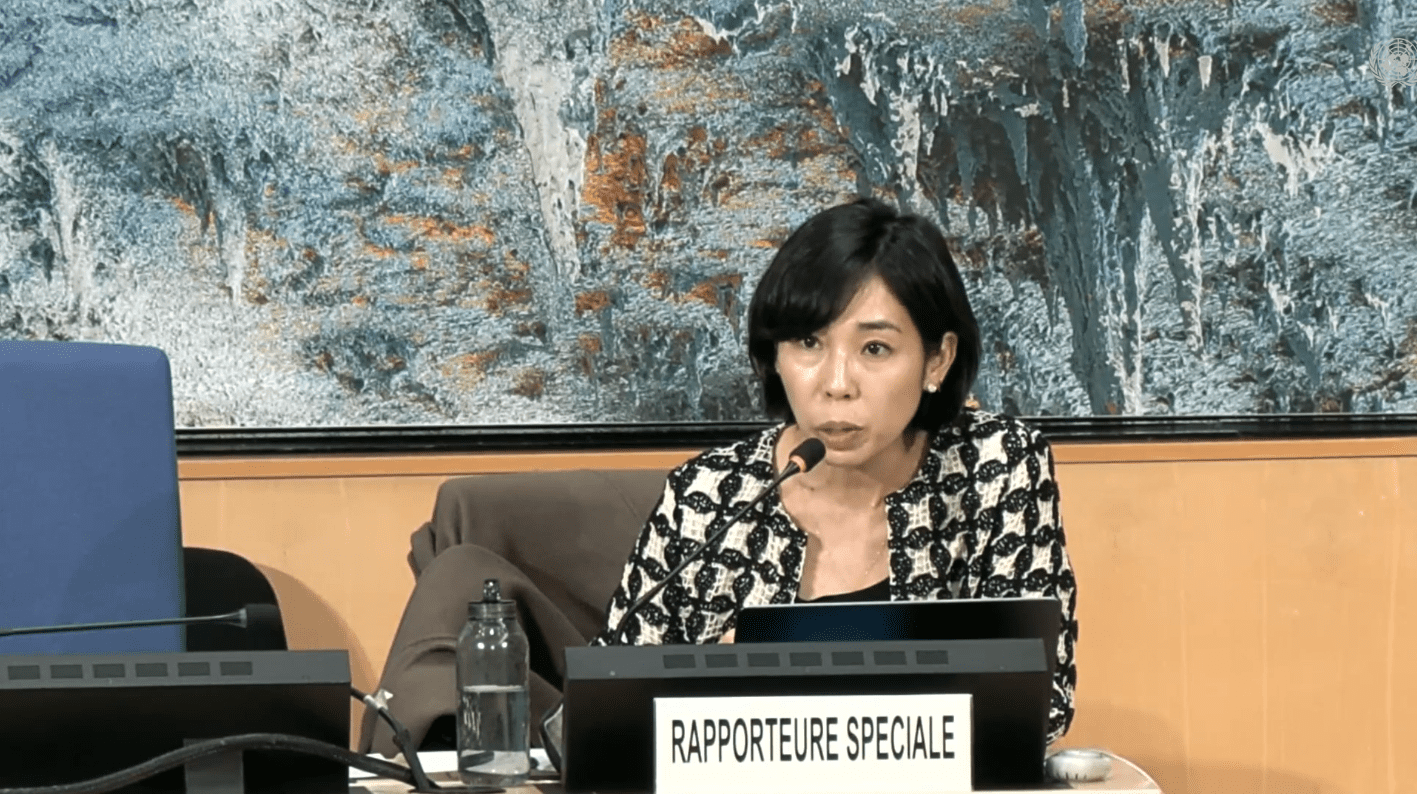
The UN’s Special Rapporteur on the situation of human rights in the Islamic Republic of Iran noted yesterday that many “prisoners remain behind bars” in Iran after being “detained simply for exercising their fundamental rights”.
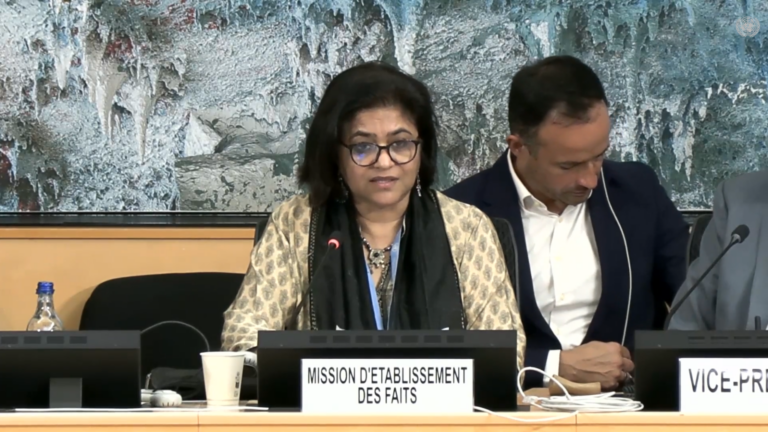
Mai Sato was speaking as part of a joint interactive dialogue with the Independent Fact-Finding Mission on the Islamic Republic of Iran, at the Human Rights Council in Geneva.
Dr Sato also highlighted the “continued persecution, arbitrary arrest and scapegoating” of religious minorities including Christians.
“I raise these points not to distract attention from what is happening now,” she said, “[but because] they are the foundation on which the nationwide protests unfolded, and they will remain long after the military strikes stop.”
The “scapegoating” of Christians was the focus of Article18’s 2026 annual report, and was also highlighted in Dr Sato’s latest report, dated 9 March.
“Although Christianity, unlike the Baháʼí faith, is a recognised religion under Iran’s Constitution, Christians—particularly converts from Islam—were also targeted,” Dr Sato wrote, citing Article18 as the source.
“As with the Baháʼí community, the military escalation in 2025 similarly triggered a wave of arrests of Christians, often accompanied by home searches and seizure of personal belongings, with authorities labelling those detained as ‘Mossad mercenaries’.”
Dr Sato’s report called on the Islamic Republic to “immediately release all individuals detained solely for exercising the rights to freedom of expression, peaceful assembly and association”, to “guarantee the rights of minorities to cultural and religious expression”, and to “ensure equal treatment before the law for all, without distinction on grounds of ethnicity [or] religion”.
Due to the ongoing Internet shutdown in Iran, information is scarce, but one NGO spokesperson, Mahmood Amiry-Moghaddam, said during the interactive dialogue that “the limited information we receive is deeply worrying”.
“In prisons, staff numbers are reduced, shortages of food and water are reported, and prisoners, including political prisoners, human rights defenders and protesters, hear explosions outside without receiving any information,” he said.
“Prisoners have become among the most vulnerable victims of this situation. They face not only the risk of bombardment, but also danger of executions carried out under the shadow of war.”
One report from Persian-language media yesterday claimed hot water and electricity had been cut in Tehran’s Evin Prison, where 16 of Iran’s at least 48 Christian prisoners of conscience are currently detained. There is also reportedly a shortage of basic facilities and medical supplies, while many prisoners are reported to have become ill due to the conditions.
The Christians currently detained in Evin include a number in their sixties, such as Iranian-Armenian pastor Joseph Shahbazian and Christian convert Nasser Navard Gol-Tapeh, who suffered a stroke in his solitary confinement cell last year.
Article18’s Fred Petrossian highlighted Nasser’s case in our first podcast, released on Saturday, calling him a “great example of resistance and suffering”.
“The judge told him: ‘You have two options: one, deny your faith and go free; second, don’t deny your faith and go to jail for 10 years,’” Petrossian recalled. “And Nasser didn’t hesitate even a second, and said that he’s a Christian, and Christianity and Christ changed his life. And the judge was quite surprised, but still he sent him to jail.”
0 Comments