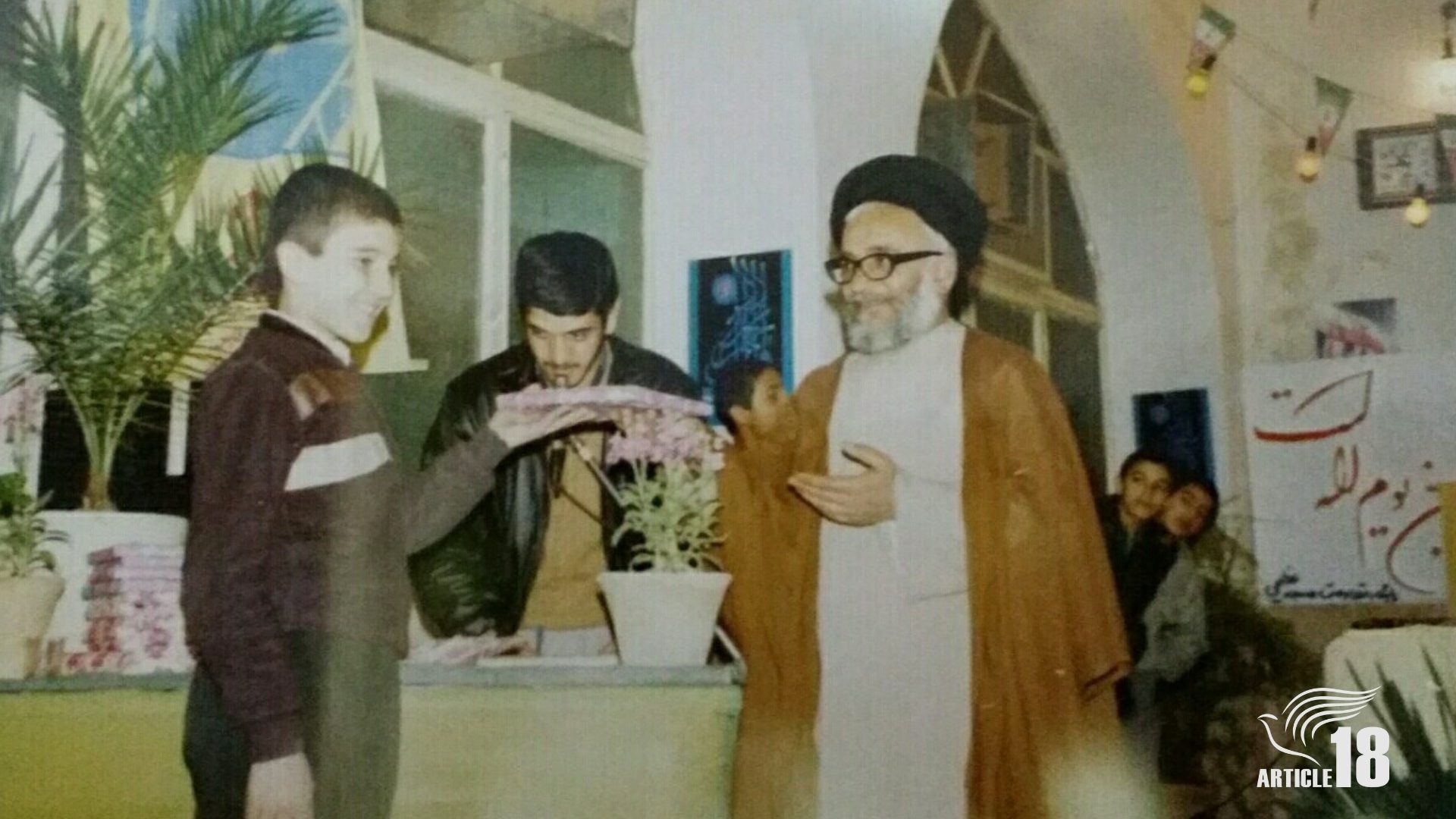
Alireza was a devout Muslim before converting to Christianity at the age of 25.
As a boy, he even received awards from his local mosque for learning passages of the Quran by heart, and later worked for the Islamic Revolutionary Guard Corps (IRGC).
But everything changed the day a childhood friend of Alireza’s explained that he had stopped coming to the mosque because he had become a Christian and invited him to join his house-church.
After reading the Bible from cover to cover and researching many other faiths in depth, Alireza also decided to become a Christian – a decision that in time would lead to his arrest, interrogation, torture, sentencing and exile.
Alireza had been a Christian for a little over four years when, in June 2009, his house-church was raided.
“The officers arrested all the members present, including women, men, and even the children, who were between the ages of one and 12,” he explains. “The children were extremely scared, and even the one-year-old, who was the grandson of one of the members, was kept in detention until the next morning.”
One of the church leaders was “taken, blindfolded, to the middle of nowhere and, in the dark, they removed his blindfold, put a gun to his head, and threatened to kill him”.
Alireza wasn’t at the meeting, but three weeks later, the IRGC came for him too.
“The way the IRGC act is very different from the Ministry of Intelligence,” he says. “IRGC agents go to homes without a legal warrant and arrest people. They say obscene and offensive things and insult and humiliate them. When I asked them what permission they had to enter our home, they opened a folder and showed me a sheet of paper without any signature or stamp. They didn’t even give me a chance to read what they had written, just saying: ‘We have a permit and it’s none of your business.’”
Alireza was arrested and detained for two and a half months, during which time he was badly beaten and psychologically tortured.
“They beat me so much that I fell off my chair and felt very unwell, started coughing and even had a panic attack,” he recalls. “After a while they poured a bucket of iced water on me and beat me with a ruler. They mostly hit me on my neck and face, where I would feel the most pain.”
The threats made against Alireza included physical torture and indefinite detention.
“The interrogator said: ‘We have an electric chair here, and if you don’t talk, we’ll torture you! We can detain you in this basement for six months and extend it for another six months, and the extensions will continue. So, you are in our custody as long as we want!’”
Due to the pressure and unsanitary conditions, Alireza fell ill.
“The floor of my cell was very dirty,” he explains. “After a few days, I was coughing violently and had to wipe my mouth with my clothes. Because the cell was dark, I hadn’t noticed that there was the blood on my vest. It was only when I went to the bathroom that I realised that what had come out of my mouth was blood. When I was eventually released, all my clothes were covered in blood.”
During one interrogation, Alireza saw that on one piece of paper his name was listed underneath a header that stated: “Names of the Shiraz Apostates”.
“Next to my name was a number, which was over 1,100 and something,” he says. “That means that, before me, they had identified or even arrested over 1,100 Christians in Shiraz!”
Alireza was charged with “acts against internal security, and propaganda activity against the Islamic Republic regime”, and sentenced to one year in prison.
Alireza appealed against the sentence, but when he went to follow up on his case a year later, he was told his appeal had been rejected and that he would be taken immediately to serve his sentence.
Alireza asked for the time to “at least go and talk to my employer, say goodbye to my family, collect my belongings, and come back when I am prepared to serve the sentence”.
His request was accepted, and so he returned home to talk to his wife about what they should do.
“We were torn about which choice to make, as both had pros and cons, but it was important to my wife and me that whatever decision we made, we should both be happy about it and agree with it,” he says.
Finally, “one Monday in 2011, my wife and I made a firm decision to leave Iran. We had passports, and a relative bought us a ticket to travel by land to Turkey at his own expense. We left Iran on the Wednesday of that same week, and arrived in Turkey.
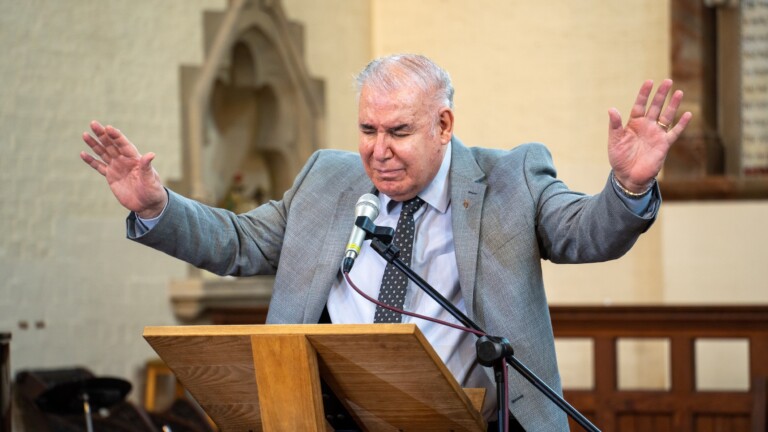
“After that, we went through the asylum process in Turkey for several years. We now live in Ireland, where I help to pastor an Iranian church in Dublin.”
You can read Alireza’s full Witness Statement here.


0 Comments