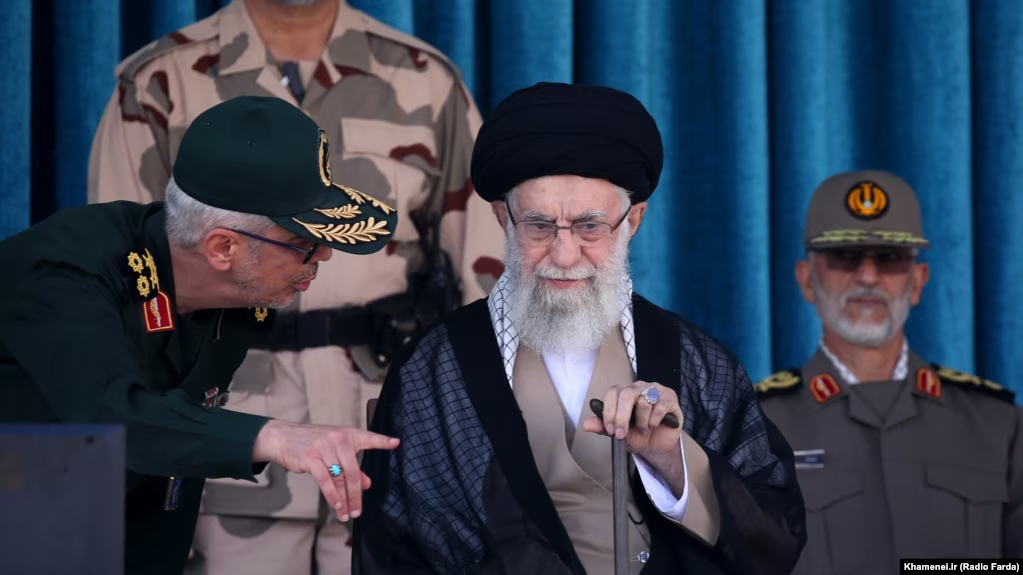

For nearly four decades, the human rights record of Iran’s Supreme Leader, Ali Khamenei, drew sustained criticism from United Nations human rights mechanisms, international NGOs, and independent experts. Among the most persistent concerns was the Islamic Republic’s treatment of freedom of religion or belief, particularly its policies toward Persian-speaking Christians and Muslim converts to Christianity.
Many of the restrictions imposed on Christians originated during the early years of the Islamic Republic following the 1979 Revolution. Under Khamenei’s leadership, however, these measures became increasingly systematic, coordinated, and institutionalised. Rather than relying on isolated acts of repression, the state gradually developed a comprehensive framework that combined criminal law, intelligence operations, administrative regulation, judicial practice, and official propaganda to restrict the public presence and growth of Persian-speaking Christianity.
Successive United Nations Special Rapporteurs on the situation of human rights in Iran and on freedom of religion or belief, together with international human rights organisations, have documented a consistent pattern of violations affecting Christians. These have included the criminalisation of religious conversion, restrictions on access to Christian literature, the closure of Persian-language churches, arbitrary detention, lengthy prison sentences, the confiscation of church property, and, in some cases, enforced disappearances and the extrajudicial killing of church leaders.
This article examines five principal dimensions of that policy and considers how they contributed to the institutionalisation of religious repression against Christians during Khamenei’s rule.
1. Apostasy prosecutions and the criminalisation of religious conversion
One of the earliest and most consequential indicators of the Islamic Republic’s evolving policy toward Persian-speaking Christian converts under Ali Khamenei was the prosecution of apostasy. Approximately one year after Khamenei assumed the position of Supreme Leader, Pastor Hossein Soodmand was tried and executed in Mashhad after being convicted of apostasy.
Soodmand, who had been born into a Muslim family, had converted to Christianity years earlier and served as pastor of a Protestant congregation in Mashhad. His execution in December 1990 marked the first documented execution of a Christian convert on apostasy charges since the 1979 Revolution. More importantly, it established an enduring precedent that would shape the state’s treatment of Christian converts for decades to come.
The significance of the case extended well beyond the fate of a single individual. The execution sent a powerful signal to Christian converts, pastors, and emerging Persian-speaking congregations that conversion from Islam carried potentially fatal consequences. It reinforced a climate of fear that would shape the development of house churches and underground Christian communities for decades to come.
The broader human rights context heightened the significance of the case. Throughout Khamenei’s tenure, Iran consistently ranked among the world’s leading users of the death penalty, prompting repeated criticism from United Nations human rights mechanisms regarding violations of the right to life and the disproportionate application of capital punishment. Against this backdrop, the execution of an individual solely for changing his religion represented not only a grave infringement of the right to life but also a direct challenge to the internationally protected right to freedom of thought, conscience, and religion, including the freedom to adopt or change one’s religion or belief.
Although formal apostasy prosecutions have become less common in recent years, the underlying policy has remained largely unchanged. Rather than relying on apostasy charges, intelligence agencies and Revolutionary Courts increasingly prosecute Christian converts under broadly defined national security offences, including charges such as “acting against national security” or “propaganda against the state,” effectively criminalising the exercise of religious freedom through alternative legal mechanisms.
2. Restricting access to Bibles and Christian literature in Persian: controlling the means of religious transmission
Control over religious literature became another central component of the Islamic Republic’s policy toward Persian-speaking Christianity. Rather than prohibiting Christianity outright, the authorities increasingly targeted access to the religious texts through which individuals could learn about, practise, and share the Christian faith. In doing so, restrictions on Christian literature evolved beyond censorship into a broader mechanism for limiting religious conversion and the growth of Persian-speaking Christian communities.
A decisive step in this policy came in February 1990, when government authorities raided the Bible Society of Iran in Tehran and ordered its closure. The organisation had served for decades as the country’s principal publisher and distributor of Persian-language Bibles and Christian literature. Its closure effectively ended the legal printing and publication of Christian texts in Persian—the language spoken by the overwhelming majority of Iranians—and marked a significant escalation in state efforts to restrict public access to Christian teaching.
Over the following decades, these restrictions expanded beyond domestic publishing. Authorities imposed increasingly stringent controls on the importation, distribution, possession, and reproduction of Persian-language Bibles and other Christian materials. Activities that would ordinarily constitute routine manifestations of religious freedom—including distributing Scripture, sharing Christian literature, or introducing others to Christian beliefs—were progressively reframed as matters of national security.
This shift became increasingly apparent in judicial practice. Intelligence files, indictments, and court judgments repeatedly cited the printing, transportation, storage, or distribution of Persian-language Bibles as evidence supporting criminal charges. Peaceful religious activities were routinely presented as proof of organised efforts to undermine the Islamic Republic, enabling prosecutors to pursue national security offences against Christian converts and church leaders without relying explicitly on apostasy laws.
The implications of these measures extended well beyond restrictions on publishing. Limiting access to religious texts constrained the ability of individuals to explore alternative beliefs, change their religion, educate themselves about Christianity, or communicate their faith to others. Such restrictions engage rights protected under Article 18 of the International Covenant on Civil and Political Rights, to which Iran is a State Party. Those protections encompass not only the freedom to adopt or change one’s religion or belief but also the freedom to manifest that belief through worship, observance, practice, and teaching.
The campaign against Persian-language Christian literature has continued into the present day. Each year, Iranian Christians are arrested for printing, possessing, transporting, or distributing Bibles and other Christian publications. Prosecutors frequently pursue charges such as “acting against national security,” or “propaganda against the state,”—offences that have repeatedly resulted in lengthy prison sentences despite involving peaceful religious activity that falls within the scope of internationally protected religious freedom.
3. Closing the churches: dismantling Persian-speaking Christian institutions
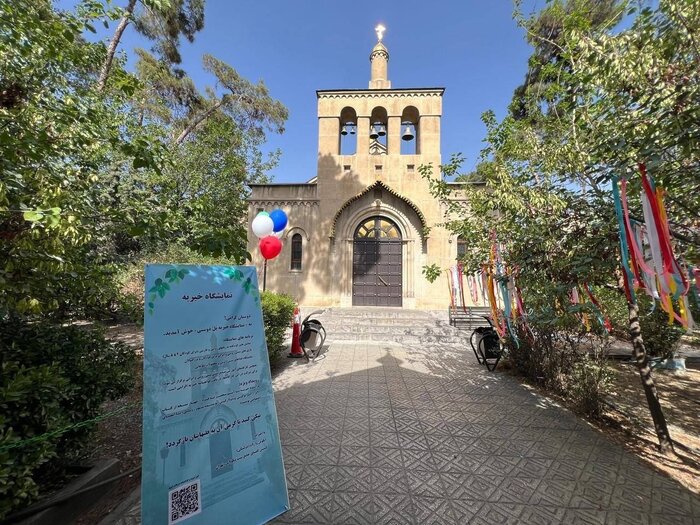
Perhaps no policy better illustrates the Islamic Republic’s long-term approach to Persian-speaking Christianity than the gradual dismantling of its institutional church life. Rather than prohibiting Christian worship outright, the authorities employed a combination of administrative regulation, intelligence oversight, judicial action, and property confiscation to deprive Persian-speaking Christians of legally recognised places of worship. Over time, this strategy transformed public Christianity from a visible religious community into one that increasingly operated underground.
From the early years of Ali Khamenei’s leadership, Protestant churches throughout Iran came under mounting restrictions from intelligence and security agencies. Rather than ordering their immediate closure, the authorities imposed a series of incremental restrictions that progressively limited their ability to function. The authorities employed a combination of administrative regulations, licensing requirements, security pressure, and judicial action that ultimately deprived Persian-speaking Christians of nearly all officially recognised places of worship.
This gradual and systematic approach enabled the state to curtail Christian religious life while maintaining the appearance of administrative regulation rather than outright prohibition. Churches were prohibited from conducting services in Persian—the language spoken by the overwhelming majority of Iranians—and were instructed to limit attendance to members of Iran’s historic Armenian and Assyrian Christian communities. Since most converts from Islam neither spoke Armenian nor Assyrian, these restrictions effectively excluded them from public worship.
Churches that resisted these measures faced escalating escalating consequences. Registration certificates were withheld or allowed to expire, clergy were repeatedly summoned for questioning by intelligence officials, religious activities were curtailed, and church properties became vulnerable to closure, confiscation, or judicial intervention. The cumulative effect was the near disappearance of Persian-language churches from Iran’s religious landscape.
The campaign extended beyond restricting worship. It also targeted the institutional infrastructure that allowed Christian communities to exist openly.
Church buildings in Ahvaz, Abadan, Arak, Shiraz, Isfahan, Shahin Shahr, Hamedan, Kermanshah, Mashhad, Gorgan, Sari, Rasht, Karaj, Urmia, Tabriz, and Tehran were confiscated pursuant to orders issued by Revolutionary Courts. Many properties were subsequently transferred to the Foundation of the Oppressed (Bonyad Mostazafan) or the Execution of Imam Khomeini’s Order (Setad or EIKO), two powerful economic institutions operating under the authority of the Supreme Leader. Some church buildings were subsequently demolished, while others were repurposed for non-religious uses, permanently removing them from Christian communal life.
The official justification for these measures often framed Evangelical and Protestant churches as political rather than religious organizations. In a 1994 interview with The New York Times, Iran’s then Deputy Foreign Minister, Mohammad Javad Zarif, argued that certain Evangelical churches should be regarded as political organisations rather than as religious institutions.
“We consider them political organisations. If someone wants to establish a political organisation, they must go through the licensing process, just as Muslims do,” he said.
In practice, however, this position exposed a fundamental contradiction in state policy. While officials insisted that Protestant churches should obtain legal registration, Evangelical congregations were routinely denied registration, and many churches that had previously operated lawfully found themselves unable to renew their licences because of persistent administrative obstruction. The licensing system therefore functioned less as a regulatory framework than as a mechanism for preventing the continued existence of legally recognised Persian-speaking churches.
These measures also conflicted with Iran’s obligations under international human rights law. Article 21 of the International Covenant on Civil and Political Rights guarantees the right to peaceful assembly, while Article 18 protects the collective manifestation of religion through worship and religious observance. By denying Christians the ability to establish and maintain places of worship, the authorities curtailed not merely individual religious practice but the institutional life of an entire religious community.
International concern over these developments emerged early. In 1995, Reynaldo Galindo Pohl, the United Nations Special Representative on the situation of human rights in Iran, called on the government to end its discrimination against Protestants—particularly converts from Islam—and called for the reopening of churches, libraries, bookshops, and other Christian institutions that had been forcibly closed. He further urged that Christians be permitted to establish new places of worship and conduct services in Persian without surveillance by the security forces.
More than twenty-five years later, the consequences of these policies remained largely unchanged. In 2021, a group of imprisoned Christian converts launched the campaign Place2Worship, demanding recognition of what they described as a fundamental right: access to officially recognised places of worship. Their appeal underscored the extent to which an entire generation of Persian-speaking Christians had grown up without the opportunity to worship openly in their own language.
Taken together, these policies did not eliminate Christianity in Iran. Instead, they transformed its organisational structure. As officially recognised churches disappeared, house churches emerged as the principal setting for Christian worship among converts. Ironically, the very phenomenon that the authorities would later characterise as a national security threat was, in significant part, a consequence of the state’s own systematic dismantling of legally recognised Christian institutions.
4. Targeting church leadership: arbitrary detention, enforced disappearances and extrajudicial killings
During the first decade of Ali Khamenei’s leadership, pastors and church leaders were became targets of arbitrary detention, enforced disappearance, and extrajudicial killing. Beyond the loss of individual lives, these actions profoundly threatened the organisational capacity of Protestant churches and rendered Christian ministry increasingly perilous.
These developments occurred within a broader security doctrine that increasingly portrayed independent religious and cultural activity as a threat to the Islamic Republic. Khamenei’s concept of a “cultural invasion” (tahajom-e farhangi) became an important element of state security policy, providing ideological justification for intensified action against perceived ideological opponents. Officials within the Ministry of Intelligence, in 1990s, employed this doctrine to justify political assassination and repression of political, cultural, and religious dissidents. These operations later became widely known as the “Chain Murders.”
At least four prominent Christian pastors were among those killed during this period: Hike Hovsepian-Mehr, Mehdi Dibaj, Tateos Mikaelian, and Mohammad-Bagher Yousefi. The significance of these killings extended beyond the removal of individual religious leaders. Together, they disrupted church governance, deprived Christian communities of experienced leadership, and reinforced the risks associated with public expressions of Christian faith. The cumulative effect was to encourage the further decentralisation of Christian communities into smaller and less visible networks capable of operating under conditions of heightened surveillance.
International investigations challenged the official explanations offered by Iranian authorities. In his report to the United Nations Commission on Human Rights, Abdelfattah Amor, the Special Rapporteur on Freedom of Religion or Belief, concluded that the available information suggested the killings formed part of a broader effort to weaken Protestant Christianity in Iran. He observed:
“According to the information received, the Government of Iran apparently decided to execute these Protestant leaders… to eliminate, at least in part, the leadership of the Protestant community within Iran and to compel them to abandon the conversion of Muslims…”
Although Iranian officials denied responsibility for the killings, the Rapporteur concluded that the available evidence indicated that the violence was closely connected to the state’s opposition to religious conversion and the expansion of Protestant Christianity.
The methods employed by the authorities evolved over time. Large-scale assassinations of church leaders became less common after the 1990s, but the strategy of disrupting Christian leadership continued through other means. Pastors and lay leaders increasingly faced arbitrary arrest, prolonged interrogation, imprisonment, travel restrictions, and sustained surveillance by intelligence agencies. National security legislation provided legal mechanisms through which many of the same objectives could be pursued without resorting to overt political violence.
5. Official rhetoric and state media: constructing the narrative of religious threat
The legal and administrative restrictions imposed on Christians were accompanied by an equally significant campaign in the sphere of public discourse. Throughout Ali Khamenei’s leadership, official speeches, state-controlled media, and public statements by senior political, military, and religious officials increasingly portrayed Protestant Christianity—and particularly converts from Islam—not as a legitimate religious community but as a security threat linked to foreign influence.
This narrative played an important role in legitimising the state’s broader campaign against Persian-speaking Christianity. Rather than presenting restrictions on churches, religious literature, or Christian converts as limitations on religious freedom, official rhetoric reframed them as necessary measures to defend national security, protect Islamic identity, and counter foreign interference.
State media frequently described Evangelical Christians and Christian converts using terms such as “Zionist missionary Christianity,” “agents of the enemy,” “deviant faith,” or a “social parasite.” Such language blurred the distinction between peaceful religious activity and hostile political action, making it easier to portray ordinary expressions of Christian faith as components of a foreign conspiracy.
A defining moment in this discourse came in October 2010, when Ali Khamenei addressed a large public gathering in the city of Qom. In a speech devoted to what he described as efforts by the “enemies of Islam” to weaken Iranian society, he identified the expansion of house churches alongside the promotion of the Baha’i faith and “false mysticism” as elements of a coordinated campaign to undermine Islam from within.
He declared:
“…They seek to weaken the people’s faith in Islam and its sacred values. Inside the country they attempt, by various means, to undermine the foundations of religious belief, especially among the younger generation—from promoting moral permissiveness to spreading false mysticism, promoting the Baha’i faith, and expanding networks of house churches. These are deliberate plans pursued by the enemies of Islam to weaken religion within society.”
By placing peaceful religious activities and house church attendance within the framework of national security threats, the Supreme Leader effectively provided an official rationale for intensified action by intelligence agencies, prosecutors, state media, and the judiciary.
The consequences became visible almost immediately. Within days, Friday prayer leaders, state broadcasters, military commanders, judicial officials, and members of parliament echoed similar themes, warning of the dangers posed by Christian converts, Baha’is, and other religious minorities. The consistency of this messaging across multiple state institutions reflected more than rhetorical alignment; it demonstrated the emergence of a coordinated official narrative that increasingly portrayed religious diversity as a security challenge rather than a protected human right.
Just two months after Khamenei’s speech, during Christmas celebrations in December 2010, the first large-scale coordinated arrests of Christians took place, with scores of individuals detained in a nationwide operation conducted by agents of Iran’s Ministry of Intelligence.
This discourse also found its way into judicial practice. In recent years, Iranian courts have cited Khamenei’s statements about house churches and foreign infiltration in judgments sentencing Christian converts and religious activists. Such references illustrate how political rhetoric gradually became embedded in legal reasoning, reinforcing the criminalisation of peaceful religious activity through the language of national security.
An institutionalised system of religious repression
The accumulated evidence, documented reports, and long-term patterns observed over the past four decades demonstrate that the situation of Persian-speaking Christians in Iran cannot be understood as a series of isolated incidents. Rather, they reflect a sustained system of legal, security, and institutional restrictions. This system has evolved from limiting access to religious texts and criminalising religious activity, to suppressing freedom of assembly, closing or confiscating places of worship, and prosecuting both church leaders and ordinary believers.
Over four decades, these policies evolved into a multilayered framework combining legal restrictions, intelligence operations, judicial prosecutions, property confiscations, and state-sponsored media campaigns. Together, these measures substantially curtailed the public practice of Persian-language Christianity and constrained the ability of converts to exercise rights protected under international human rights law, including FoRB, freedom of expression, and freedom of association.
From the perspective of international human rights bodies, these policies are fundamentally incompatible with the principles of FoRB, freedom of conscience, and the right to worship freely. Responsibility rests with the governing system in which these policies were conceived, institutionalised, and enforced, and ultimately with Ali Khamenei, under whose leadership they became firmly entrenched.
0 Comments