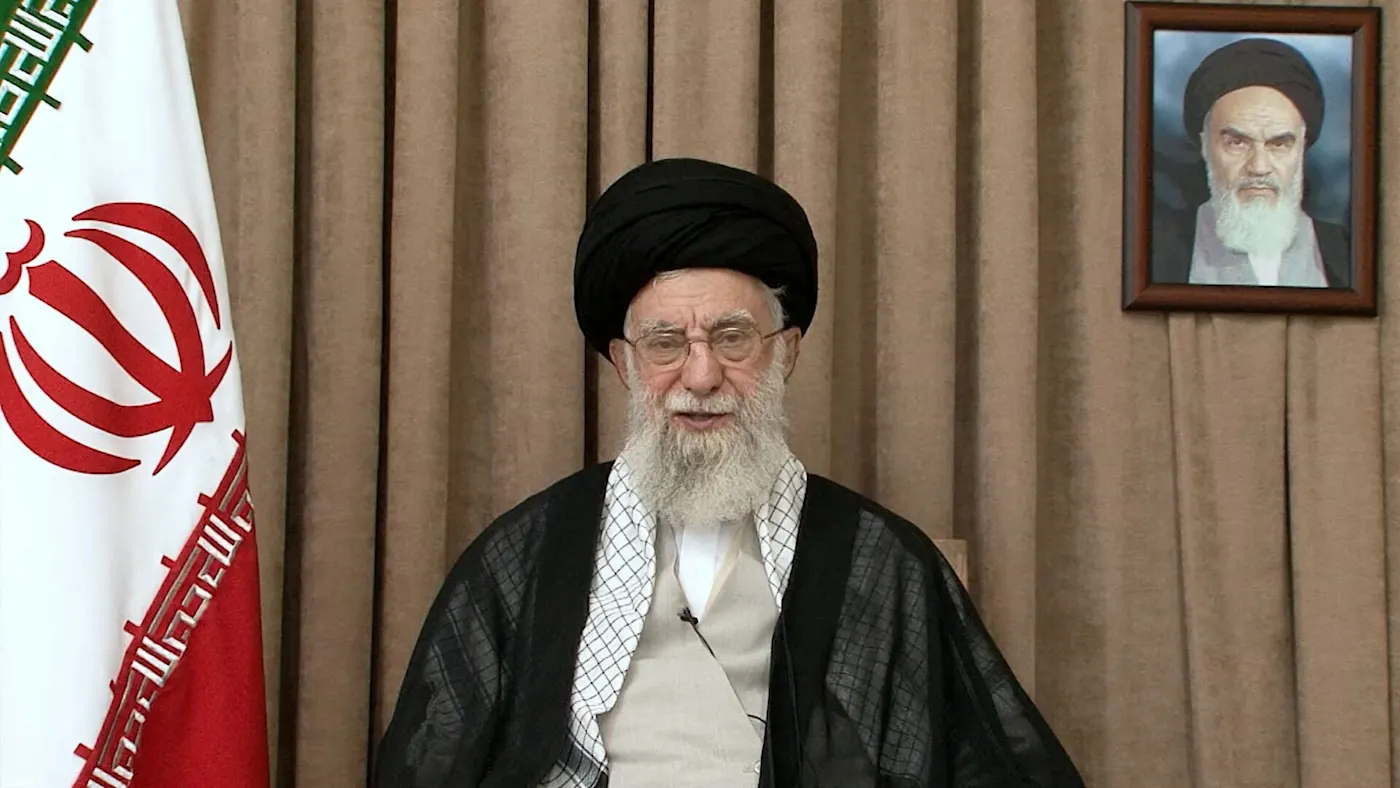
“Khamenei, one of the most evil men in history, has been killed.”
This message from Donald Trump on social media confirmed the death of the leader of the Islamic Republic and provoked a wave of reactions inside and outside Iran.
In the following hours, several videos were released showing Iranians celebrating in the streets.
In one of these videos, a young man shouts among the happy crowd: “Am I dreaming? Hello, new world!”
At the same time, since Saturday morning, Israel and the United States have been targeting Tehran and several other cities in Iran, including Kermanshah, Qom, Karaj and Tabriz.
The Islamic Revolutionary Guard Corps (IRGC) also announced that it has targeted Israel with missiles and drones, while strikes have also hit several other countries in the region.
In his message, Trump described the operation as “not only justice for the Iranian people, but also for all Americans and people from different countries around the world”, who, he said, “have been killed or maimed by Khamenei and his bloodthirsty thugs.”
Khamenei’s leadership of Iran began in 1989, after the death of the founder of the Islamic Republic, Ayatollah Ruhollah Khomeini.
Khamenei continued Khomeini’s path of repression, censorship, and global isolation, and his name is associated with bloodshed at home and terrorism abroad.
The torture and execution of political and civil protesters, which began during Khomeini’s time, continued during Khamenei’s 37-year rule.
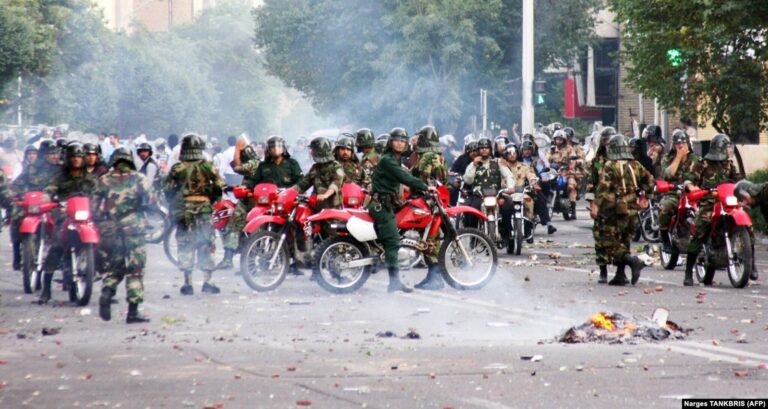
During these years, the Islamic Republic has faced widespread waves of protest: the student protests of 1999, Green Movement of 2009, mass demonstrations of 2017 and 2019, and the “Women, Life, Freedom” movement of 2022; all of which were met with severe security repression.
In the most recent massacre of protesters, just a few weeks ago, which was also carried out on Khamenei’s orders, tens of thousands of citizens were killed; among them, at least 19 Christians lost their lives.
To understand the situation of Christians during Khamenei’s era, a turning point that many refer to was his speech in Qom in October 2010, when he justified the crackdown on the 2009 protests by saying that it had vaccinated the country against “political and social germs”. He also claimed that “the enemies of Islam” had resorted to “spreading lawlessness, promoting false mysticism, promoting Baha’ism, and expanding house-churches” to weaken religion in Iranian society.
Following this hate speech, human rights organisations reported increased pressure on religious minorities, including Christians—especially converts.
The ensuing wave of arrests, heavy prison sentences, pressure to return to Islam, and the closure of Christian gathering spaces were all defined within the same security perspective that saw “house-churches” not as a religious phenomenon but as the construct of an external enemy.
Islamic Republic officials have always called these measures “implementation of the law”, but critics and human rights activists see them as a clear violation of freedom of religion and conscience.
Ali Khamenei’s name is not only associated with the suppression of religious minorities and dissidents at home. Internationally, Sebastian Basso, the prosecutor in the Argentine Mutual Israelite Association (AMIA) bombing case, accused him of involvement in the deadly 1994 attack, and requested a domestic and international arrest warrant.
Khamenei was also known as a staunch supporter of groups such as Hamas and Hezbollah, and took strong and open positions against Israel in various speeches.
During his term, structural corruption and poverty in Iran reached its peak, and the national currency reached its lowest value in history.
Khamenei even banned the import of Covid-19 vaccines from the United States and Britain.
His interference in various areas of Iranian life sometimes took on other strange dimensions. In 2019, amid criticism of changes to mathematics textbooks in schools, the head of Iran’s Educational Research and Planning Organization said the goal was to “provide for the views of the leader”; a small but telling example of how even high-school maths must be aligned with his particular viewpoint.

0 Comments