This analysis, by Iranian-Armenian journalist Fred Petrossian, was presented today at the 2026 conference of the Institute for the Study of Freedom of Religion or Belief (FoRB) in Leuven, Belgium.
The Shannon–Weaver communication model can be applied to the situation of political and conscience prisoners in Iran, including religious minorities such as Christian converts, by identifying two parallel communication systems: one operated by persecuted minorities/human rights actors, and another constructed by the state.
The first concerns the transmission of information about repression and religious persecution:
- Sender
The sender may be a prisoner of conscience, such as a Christian convert arrested because of religious activities or participation in house-churches. - Transmitter
The message is transmitted through family members, friends, lawyers, or house-church leaders who communicate news of the arrest or mistreatment. - Channel
The communication channels include the Internet, messaging applications, telephone calls, social media, and informal transnational religious networks. - Decoder
Human rights organisations and advocacy groups, such as Article18, decode, verify, and interpret the information before presenting it to international audiences. - Receiver
The final receivers include international institutions and political actors such as the UN, European Parliament, NGOs, churches, and foreign governments.
Within this process, the state attempts to create “noise” that disrupts communication. This noise may take several forms:
- intimidation and pressure on prisoners or family members to remain silent;
- Internet filtering and phone surveillance;
- censorship and restrictions on communication channels;
- production of alternative narratives that blur the distinction between lived reality and official discourse.
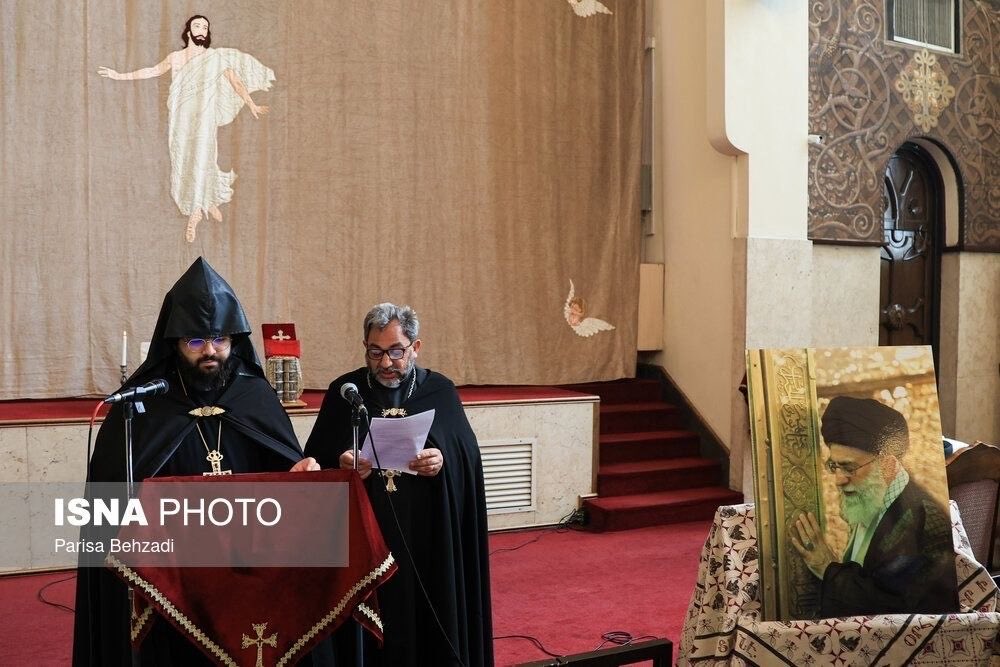
This distortion may operate negatively by portraying Christian converts as spies, foreign agents, or threats to national security rather than prisoners of conscience. It may also operate positively through symbolic gestures, such as emphasising historical Armenian churches or highlighting Christian cultural heritage while ignoring the discrimination and legal restrictions experienced by converts and minority Christians.
However, the state does not merely react defensively by generating noise. It also constructs its own communication system and counter-discourse:
- Sender
State institutions, particularly intelligence bodies, IRGC, official media, and ideological institutions. - Transmitter
State-loyal minority representatives, approved by the State due to for their loyalty, and members of parliament who reproduce and legitimise official narratives. - Channel
Channels include state-controlled media, filtered social media platforms, diplomatic networks, public conferences, and international meetings. - Decoder
Foreign observers, journalists, international organisations - Receiver
The intended receivers are international institutions, foreign governments, churches, NGOs, and global public opinion.
The purpose of this parallel communication system is not only to defend the state against criticism but also to shape international perceptions proactively. Through this process, the state seeks to frame itself as tolerant toward religious minorities while simultaneously marginalising dissenting religious groups and undermining external criticism.



0 Comments