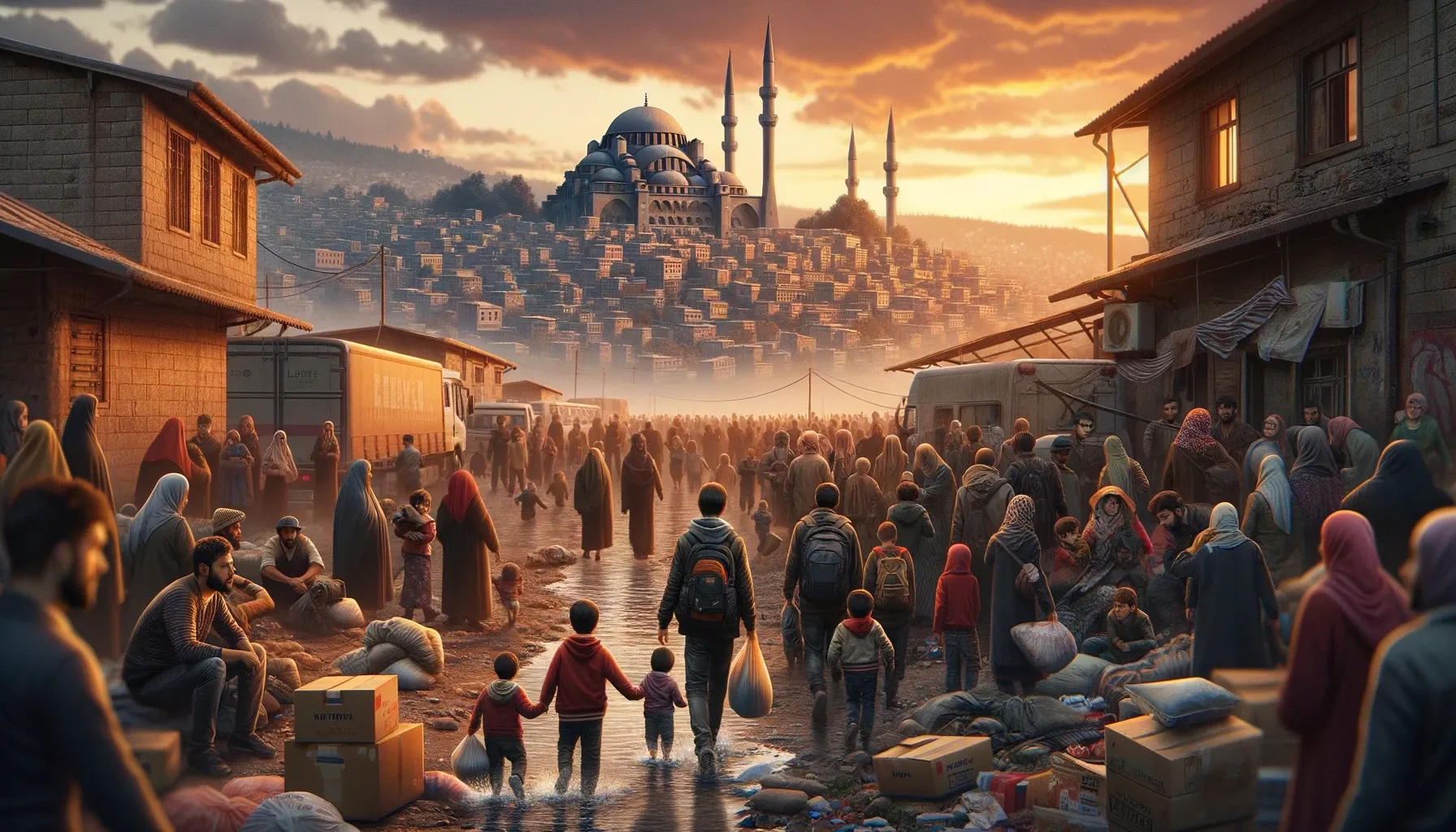
These texts share the experiences and challenges of refugees who spent years in Turkey and, after facing various issues—including economic, cultural, and social difficulties—eventually succeeded in being resettled in Western countries, where they have now begun a new life.
Fariba Nazarianpour
I spoke with a Christian brother about my asylum situation and that of my family. He gave me information about immigrating to Canada through sponsorship. Until that day, I had no knowledge of this pathway. Through him, I was introduced to another Christian brother in Canada who, after much effort, was able to find sponsors for me and my family. To communicate with sponsors and complete the required forms, it is necessary that we—or one of our close relatives—have a good command of English.
From the time we started completing the forms to our flight to Canada, it took about two years. One of our challenges was that our flight date coincided with the COVID-19 period. Our departure was delayed by eight months. We had sold all our belongings, and those eight months were very difficult for us.
I recommend that refugees dedicate some time each day to learning English before arriving in their destination country. This is extremely important and useful both before and after resettlement. The good news is that in Canada, language classes at all levels are free, both in person and online.
My second recommendation is to have a driving licence. Those who already have a licence can use it for three months after arriving in Canada, but after that, they must retake the test and obtain a Canadian licence.
Alongside prayer, we tried to support refugees in Turkey in various ways. From the very beginning of our arrival in Canada, my son Nima recorded an audio guide explaining the Canadian sponsorship process and shared it with anyone we knew who was unfamiliar with this pathway.
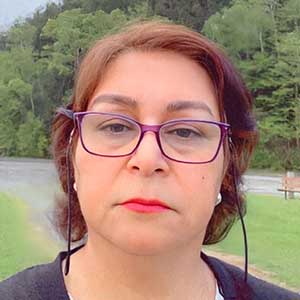
Homayoun (Esmail) Shokouhi Gholamzadeh
We do not only pray for refugees; we also take practical steps within our capacity. For example, we spoke with the leadership team of a church that was not familiar with the sponsorship pathway and shared with them information about this route and the situation of refugees in Turkey. They, too, became interested in learning more and supporting refugees in Turkey.
The situation of refugees in Turkey is very important to us. My family and I have tried to live and serve in a Christ-like way, in response to His calling. Our conduct and actions encouraged our sponsor—who had never met an Iranian Christian before—to become willing and motivated to sponsor two other Iranian Christian refugee families.
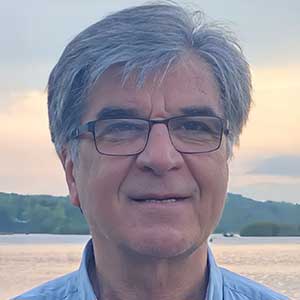
Iman Ghaznaviyan
From the time I began completing the Canadian sponsorship forms until my departure, it took about four years. This was because, during and after the COVID-19 pandemic, Ukrainian and Afghan refugees were prioritised. One of the main challenges for me was the lengthy four-year process, which required great patience.
I would advise dear refugees not to focus solely on the process of moving to a third country. Instead, they should dedicate time each day to learning English and developing one or more skills, as these are very important and practical in a third country. Learning English and acquiring skills will help you find employment more easily after resettlement.
Many churches and sponsors cannot easily build trust, as they have had negative experiences with some Iranian Christians—individuals who displayed unhealthy behaviour or even stopped attending church after arriving in a third country. I have always tried to live a healthy Christian life, not only to be accountable to Jesus Christ, but also to ensure that my behaviour does not prevent other refugees from receiving support from sponsors.

Hekmat Salimi-Saadi
In Iran, because of my Christian faith and church activities, I experienced imprisonment and persecution by the government on four occasions. Despite this, the Turkish police rejected our case and issued a deportation order for me and my family. We were forced to flee secretly at night from the city of Zonguldak to Istanbul.
We were living in a state of displacement and took refuge in a Catholic church. Financially, we were under great pressure and hardship. Our kimlik (refugee identification card in Turkey) was no longer valid. Out of fear of being arrested by the police, we rarely left the house. In those difficult and painful circumstances, God reassured us that we were not alone and that we were under His protection.
Following the advice and guidance of Pastor Mansour Borji, we publicised the unjust deportation order issued against us by the Turkish migration authorities. Leaders of an Episcopal church in the United States became aware of our story and raised our case with the U.S. Embassy in Turkey. As a result of this support and cooperation, we were granted a humanitarian visa and were able to immigrate to the United States.

0 Comments