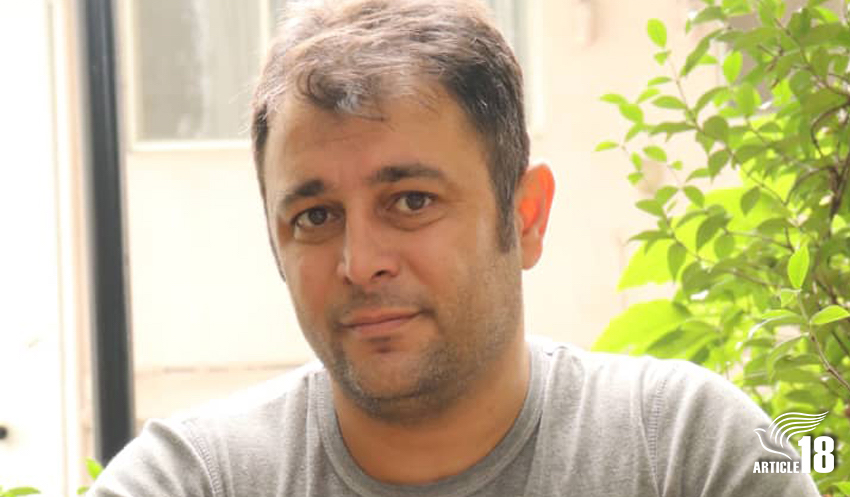
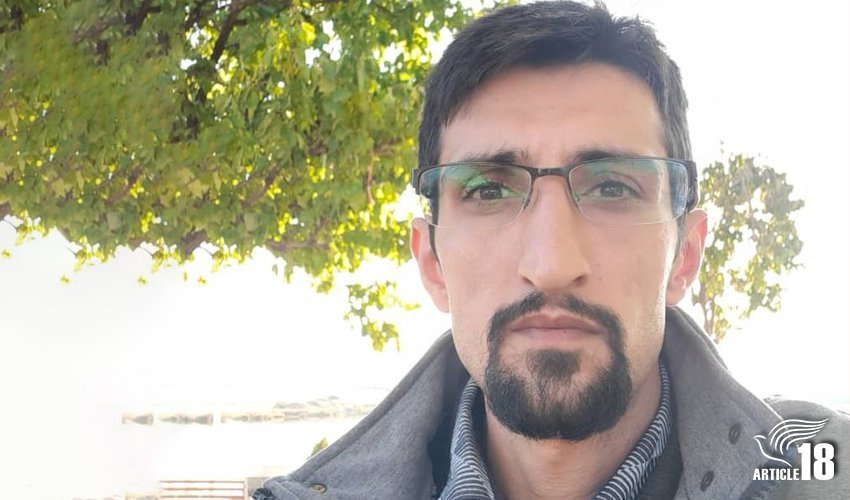
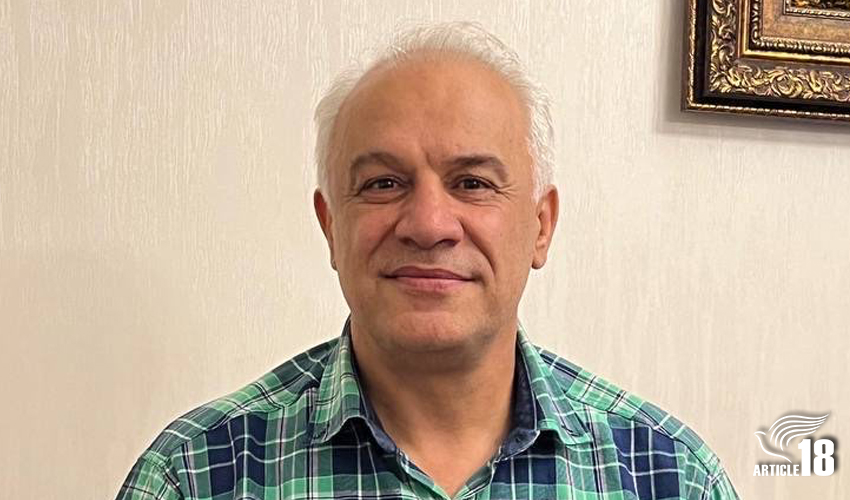
Nine converts conditionally released following Supreme Court ruling 1 January 2022 News Clockwise from top-left: Shahrooz Eslamdoust, Mehdi Khatibi, Babak Hosseinzadeh, Hossein Kadivar, Mohammad Vafadar, Abdolreza (Matthias) Ali-Haghnejad, Behnam Akhlaghi, Khalil Dehghanpour, Kamal Naamanian Nine converts serving five-year prison sentences for their involvement in house-churches have been conditionally released from prison, pending a review of their case. The nine men were informed on Wednesday 29 December that they would be released on or before the New Year. The first of the men, Abdolreza (Matthias) Ali-Haghnejad, was released from Anzali Prison the following day, 30 December, and the remaining eight were released from Tehran’s Evin Prison earlier today. Their conditional release follows a Supreme Court ruling in November, in which the judges questioned the legality of their conviction and affirmed that “merely preaching Christianity, and promoting the ‘Evangelical Zionist sect’, both of which apparently means propagating Christianity through family gatherings [house-churches], is not a manifestation of gathering and collusion to disrupt the security of the country, whether internally or externally”. This decision followed the launch of a campaign, #Place2Worship, which was inspired by two of the nine men, Behnam Akhlaghi and Babak Hossainzadeh, who during a short furlough in October had recorded videos and wrote an open letter to the Iranian authorities asking, “Where can we, as Persian-speaking Christians, worship once we have finished serving our prison sentences?” All nine men – Abdolreza (Matthias) Ali-Haghnejad, Shahrooz Eslamdoust, Behnam Akhlaghi, Babak Hosseinzadeh, Mehdi Khatibi, Khalil Dehghanpour, Hossein Kadivar, Kamal Naamanian and Mohammad Vafadar – are members of the non-Trinitarian “Church of Iran” from the northern city of Rasht. They were arrested during raids on their homes and house-churches in January and February 2019, and each sentenced to five years in prison in October 2019 by Judge Mohammad Moghiseh, who has earned the nickname the “Judge of Death” for his harsh treatment of prisoners of conscience. The Supreme Court verdict issued on 3 November had paved the way for their immediate release – until a Revolutionary Court had time to reconsider their case and issue a fresh judgment – however for unknown reasons their release was delayed until now. Their temporary release is not related to a recent directive of the judiciary to give a 10-day furlough to Christian prisoners over the Christmas period, as prisoners convicted of “acting against national security”, or sentenced to more than five years, were not included in the directive.
Iran ranks eighth in global persecution of Christians 14 January 2021 News Iran has risen to eighth place in the latest annual listing of the 50 countries in which the persecution of Christians is most prevalent. The 2021 World Watch List was published yesterday by international Christian charity Open Doors. North Korea, Afghanistan and Somalia top the list, as they did last year. Iran was ranked ninth last year. According to the new list, Eritrea and Yemen are ahead of Iran, with Iraq, Syria, Sudan and Saudi Arabia ranking 11th to 14th, respectively. “The Iranian government sees the conversion of Muslims to Christianity as an attempt by Western countries to undermine the Islamic rule of Iran. Christians from a Muslim background are persecuted the most. Secret house-churches are often raided, and their leaders and members have been arrested and given long prison sentences for ‘crimes against national security’,” Open Doors’ report states. The Iranian government has repeatedly imprisoned Christian citizens without providing any evidence of these loosely-termed charges. Persian-language churches have been closed by the government in recent years, and security forces have attacked house-churches and even confiscated the Christians’ Bibles as evidence of a crime. Open Doors explains that, unlike converts, “Christians from Armenian and Assyrian communities are recognised and protected by the state, but still treated as second-class citizens. They are not allowed to tell others about Jesus or to speak in Persian during their church services”. The report adds that the persecution of Christian converts is not limited to the Iranian government, and that sometimes the families of the converts also harass them. “Measures to combat COVID-19 have also made communication between Christians difficult, and they are increasingly exploring online fellowship and discipleship. Many believers are in desperate need of food and aid,” adds Open Doors. “Many Iranian prisoners, including some imprisoned for their faith, were released from prison in order to combat the spread of COVID-19 in packed jails. However, other Christians remained in jail and the sentencing of other Christians continued.” In a report to the European Parliament last year following the release of its 2020 list, Open Doors explained: “Usually, ‘hammer repression’, such as the physical removal of Christians due to extreme violence, becomes the headline in the news, but there is also a daily, silent repression that deprives Christians of basic rights, including teaching and the right to work, and puts their lives under severe pressure.” Article18’s 2021 annual report is due to be published in the coming days, and will include detailed accounts from last year of Iranian Christians being subjected to exile, imprisonment, deprivation of education, raids on house-churches, flogging, confiscation of personal property, and even deprivation of the right to have an adopted child.
USCIRF: Religious freedom conditions ‘deteriorate’ in Iran 1 May 2018 News The U.S. Commission on International Religious Freedom has cited Iran among the main contributing countries towards an “ongoing downward trend” in religious liberty worldwide and called on the Trump administration to prioritise the release of religious prisoners and assist in resettling refugees fleeing persecution. “Sadly, religious-freedom conditions deteriorated in many countries in 2017, often due to increasing authoritarianism or under the guise of countering terrorism,” said USCIRF Chairman Daniel Mark as the independent watchdog issued its 2018 report on Wednesday (25 April). “Yet there is also reason for optimism 20 years after the passage of the International Religious Freedom Act. The importance of this foundational right is appreciated more now than ever, and egregious violations are less likely to go unnoticed.” The commission asked the State Department to re-designate 10 nations, including Iran, as “countries of particular concern”, or CPCs, for “egregious” religious-freedom violations. Iran has maintained CPC designation under the International Religious Freedom Act (IRFA) since 1999. A map of the countries of particular concern in the ‘United States Commission on International Religious Freedom: 2018 Annual Report’. Image courtesy of USCIRF The report noted: “In the past year, religious freedom in Iran continued to deteriorate for both recognised and unrecognised religious groups, with the government targeting Baha’is and Christian converts in particular.” It also reiterated that “evangelical Christians and Christian converts, however, are particularly targeted for repression because many conduct services in Persian and proselytise to those outside their community. Pastors of ‘house churches’ are commonly charged with unfounded national security-related crimes, as well as apostasy and illegal house-church activities”. In their report, the commissioners call on the Trump administration to prioritise the release of people “imprisoned for their religious beliefs, activity, identity, or religious-freedom advocacy” and the resettlement of refugees fleeing religious persecution. According to the report, violations of religious freedom included a range of severe abuses – from surveillance and legal restrictions, to arbitrary arrest, detention of Christians and the proliferation of anti-Christian publications in Iran. “While Iranian authorities have for decades raided ‘house-church’ services and arrested hundreds of worshippers and church leaders, the severity of sentencing has increased in recent years,” the report noted.
Iran detains another Christian convert 12 October 2017 News Mohammad Ali Torabi, an Iranian convert to Christianity, has been arrested in the city of Dezful, in the southwest of the country. Security agents detained Mohammad at his office in the Qal’a Sayyed district of Dezful on Tuesday, 10 October and took him to an unknown location. His family has no information on his whereabouts, so far. Mohammad, who is known as Davoud by his Christian friends and leads the Message of Peace Church in Dezful, was arrested with two other Christian converts, but they were freed after being interrogated. Several Iranian converts to Christianity have been arrested in recent months in Iran. In many cases, the detainees were accused of “action against national security” through “organising or membership of home-churches”. Article 18’s Advocacy Director, Mansour Borji, has dismissed such accusations as “illusory” and “the reflection of the Islamic republic’s security-oriented approach towards religious minorities”. He added: “We are deeply concerned by the continuing use of baseless charges, which seem to act as a smokescreen for religiously motivated charges and are employed to further suppress the right to freedom of religion or belief in Iran.” According to Article 18 of the International Covenant on Civil and Political Rights, which Iran ratified in 1975, “everyone shall have the right to freedom of thought, conscience and religion”. Last year, in a joint statement, 19 human rights organisations called on the international community to press Iran to end the persecution of newly converted Iranian Christians.
Four Christians receive long prison sentences 8 July 2017 News From left: Bahram Nasibov, Eldar Gurbanov, Yusif Farhadov and Nasser Navard Gol-Tapeh. An Iranian court has sentenced four Christians to ten years’ imprisonment. Nasser Navard Gol-Tapeh, an Iranian citizen and Christian convert, has been found guilty along with three Azerbaijani Christians who were arrested with him in Iran in June 2016. The four individuals were accused of “actions against [Iran’s] national security”, “missionary activities”, “organic relations with Sweden’s ‘Word of Life’ Church”, “soft subversive activities against the Islamic Republic regime” and what the prosecutor called “Zionist Christianity”. The Azerbaijanis – Eldar Gurbanov, Yusif Farhadov and Bahram Nasibov – are unlikely to have to serve their sentences because they were allowed to leave Iran in November last year and will not be forced to return. However, the Iranian – Nasser, a convert from a Muslim background – remains in Iran and will have to serve his sentence unless successful with his appeal. The Azerbaijanis, who are from Baku, were detained on 24 June 2016, along with several Iranian citizens, while visiting Iran as guests of Iranian Christian groups. Most of the detainees were released after being interrogated. Article 18’s Advocacy Director, Mansour Borji, dismissed the charges as “illusory” and “a reflection of the Islamic republic’s security-oriented approach towards religious minorities”. He added: “We are deeply concerned by the continuing use of baseless charges that seem to act as smokescreen for religiously motivated charges and are utilised to suppress the right to freedom of religion or belief in Iran. So many Christians in Iran are accused of these baseless charges merely for attending prayer meetings in the privacy of their homes.”
Court sentences four Christians to a total of 45 years in prison 5 July 2017 News Pastor Bet-Tamraz, Amin Afshar-Naderi, Kavian Fallah-Mohamadi and Hadi Asgari An Iranian Revolutionary Court judge has sentenced Pastor Victor Bet-Tamraz and Christian converts Kavian Fallah-Mohammadi and Hadi Asgari to 10 years in prison each and Amin Afshar-Naderi to 15 years for their participation in “house-churches”. The four Christians have also been forbidden to leave Iran for two years. They will appeal against the verdict, which was pronounced by judge Mashallah Ahmadzadeh. Their appeal process could take anywhere between two months and two years. The Revolutionary Court found all four men guilty “action against national security by organising and conducting house-churches”. Amin received an additional five-year sentence for “insulting the sacred” (blasphemy). Kavian and Amin were first arrested alongside Victor, their pastor, as they celebrated Christmas together in 2014. Victor, who led the Tehran Pentecostal Assyrian Church until its closure by Iran’s Interior Ministry in 2009, is of Assyrian descent and was found guilty of “conducting evangelism” and “illegal house-church activities”, among other charges. His convictions are believed to relate to actions before and after the closure of his church. The four have been required to pay differing amounts for bail, ranging from 100-300 million tomans (between $30,000-$90,000). Victor and Kavian have posted bail, but Hadi and Amin remain in jail, where they have been since their arrest in August 2016 while on a picnic in the Alborz mountains north-east of Tehran. Three other Christians arrested at the picnic – including the pastor’s son, Ramiel – were later released on bail after each paying between $30,000-$60,000. Earlier this year, Hadi and Amin went on hunger strike to protest against being denied medical treatment, having reportedly suffered ill health. Middle East Concern reported that Asgari had faced “particularly intense pressure” during his interrogation. Meanwhile, Victor’s wife, Shamiram Issavi, and their son, Ramiel, await trials of their own. Shamiram was last month charged with “participating in foreign seminars” and “acting against Iranian national security” as a church member. She was released a day later on bail equivalent to $30,000. Ramiel has been charged with “acting against national security” and “organising and creating house churches”, as well as charges relating to his father’s ministry.