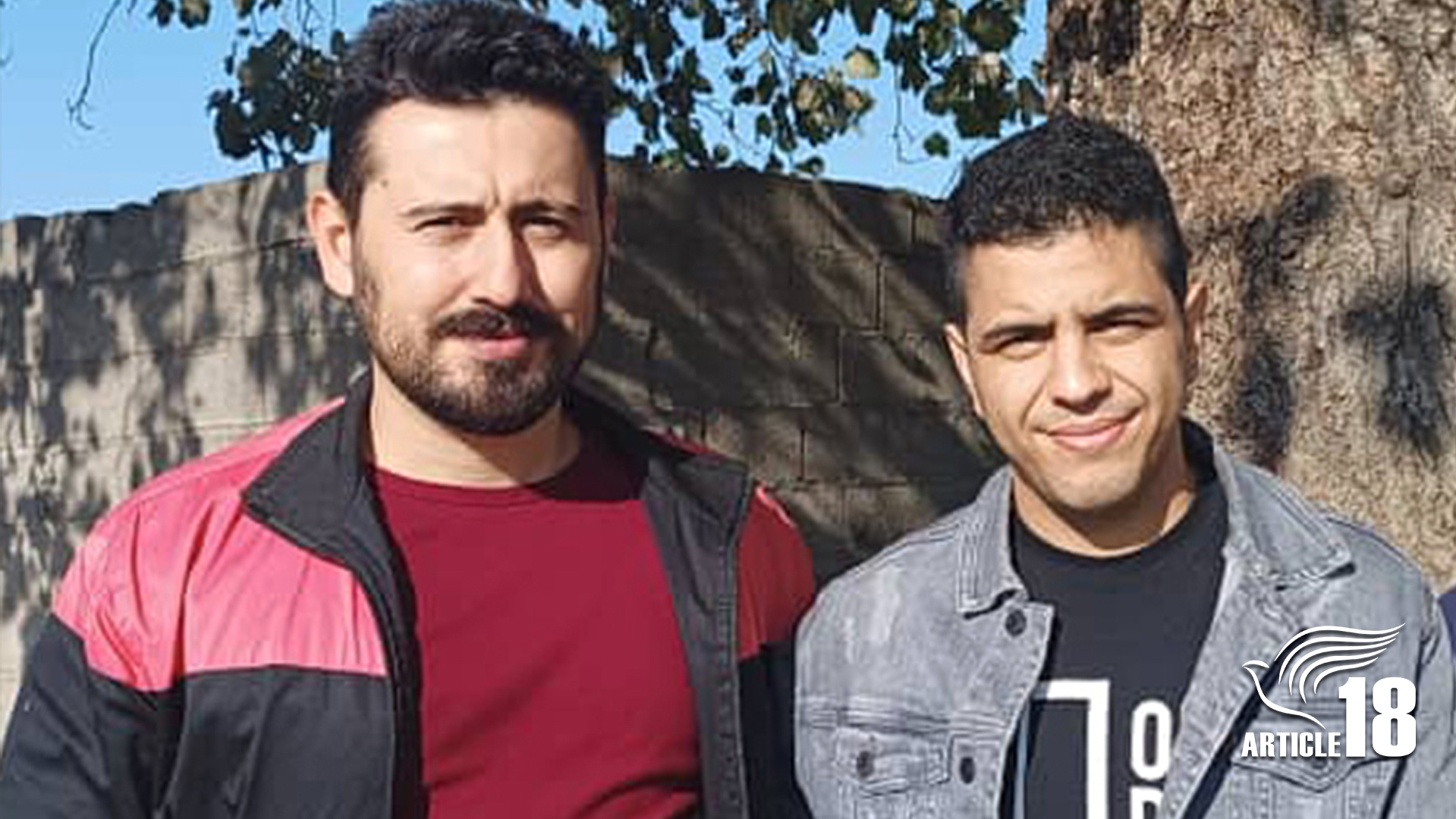
Two house-church members have been released after serving five-year sentences on charges of “engaging in deviant propaganda contrary to the holy religion of Islam” and “connections with foreign leaders”.
Ahmad Sarparast and Ayoob Poor-Rezazadeh, who live in the northern city of Rasht, were released in May, but the news has only reached Article18 now, as communication lines have been slowly restored in Iran after an 88-day Internet shutdown.
The pair were first arrested back in September 2021, alongside fellow “Church of Iran” member Morteza Mashoodkari.
The three men were sentenced in April 2022 to five years in prison, but Morteza’s sentence was later halved and he was released in December 2024.
In October 2023, Ahmad and Ayoob were released from Lakan Prison to serve the remainder of their sentences as what are known in Iran as “open sentences”, whereby prisoners can remain outside prison but must endure forced labour.
For the next two and a half years, the two men had to work in local factories, without pay, until on 4 April 2026 they were unexpectedly sent back to prison.
Ayoob and Ahmad were finally released on 11 and 16 May, respectively, and told that their sentences could be considered completed.
In total, they spent over one and a half years in prison and endured two and a half years of forced labour.
Background
Ahmad, Ayoob and Morteza were among the first house-church members to be convicted under the 2021 amendments to Article 500 of the Islamic penal code, which were described by one organisation as a “full-on attack on the right to freedom of religion and belief”.
In their defence, the trio said they were “just Christians worshipping according to the Bible” and had “not engaged in any propaganda against the regime or any action against national security”.
Their lawyer, Iman Soleimani, complained that his clients had been convicted only on the basis of the claims of intelligence agents of the Revolutionary Guards Corps; that the judge had also taken on the role of accuser; and that there was no legal justification for the sentences, as his clients’ only “crime” had been to meet together for Christian prayer and worship.
A religious assembly, Mr Soleimani said, could not be considered an “action against the state”, while although Iran’s constitution forbids “inquisition” into a person’s beliefs, the judge’s very first question had been about their beliefs, and their confirmation of them drew an angry response. Their beliefs were later also referenced in the verdict.
Mr Soleimani later wrote on X: “I’ve been involved with this case from the beginning, and volumes of unspoken stories could be written regarding the shortcomings of how the arrest and preliminary investigations took place, the illegal proceedings in the Revolutionary Court in Rasht, and even the way my defendants were wrongfully condemned for someone else’s interview about them with Iran International.”
In another post, he wrote: “Unfortunately, in political and ‘security’ cases, the judges are under a lot of pressure from the arresting agents, and some independent judges have openly stated this in the presence of lawyers and defendants, and complained about this situation and the fact that they can also face charges themselves if they do not comply.”
Article18’s executive director, Mansour Borji, said the verdict was “typical of arbitrary sentences, stating only that the individuals were convicted because they had remained ‘persistent in their beliefs’”.
“This is clearly a violation of the Iranian constitution, and contrary to the repeated claims of regime officials that ‘no-one is imprisoned because of their beliefs’,” he said.
“The conviction was based only on the reports of interrogators – nothing more – and was therefore entirely devoid of any legal justification. The proceedings in this case also clearly debunk Iranian officials’ claims, repeated constantly to international media, that the judiciary is independent.”

0 Comments