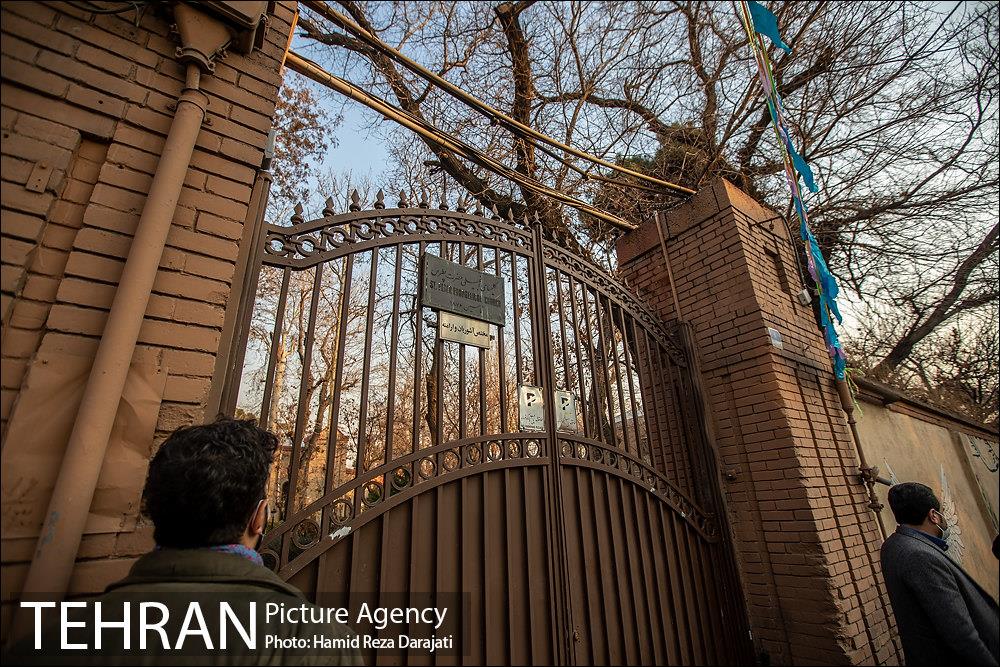
Guards have been posted in front of St Peter’s Evangelical Church in Tehran, the oldest Protestant church in Iran, a month after the church was seized, to prevent members from returning.
The church’s leaders had been told that they had until 12 August to vacate the premises, but precisely one month earlier, on 12 July, a large number of Ministry of Intelligence stormed the church and forcibly evicted the last remaining residents.
This came after the leaders of the church had been ordered to evict the 20 Assyrian and Armenian families living on the compound, and to tell congregants to find new churches to worship in.
Just one of the ethnic minority families that had been living in the complex still remained by 12 July, and this family were ordered to leave their home by 4pm, and finally did so with the help of friends and acquaintances.
The remaining office buildings belonging to the church were also taken over by the agents.
According to Article18’s sources, the now-former residents of the compound were filmed as they were forced to sign documents, which are believed to have signalled their consent at their displacement.
Article18 understands that the Assyrian representative to the parliament, Sharli Envieh, was involved in pressuring residents to leave their homes and threatening them with arrest should they resist.
Like other ethnic minority representatives of the parliament, Mr Envieh has been a regular defender of the Islamic Republic, stating at the United Nations last year that “everyone enjoys equal rights” in Iran, having previously labelled evangelical churches as “repugnant”, and warned Assyrian youths who took part in protests against the regime.
Two UN experts condemned the confiscation, saying in a joint statement: “This is not an isolated incident, but the culmination of a long pattern of measures directed against Iran’s Christian community, and in particular against Persian-speaking Christian worship.”
Background
St Peter’s Evangelical Church was founded in 1876. The church building and compound are of inestimable historical significance for the Protestant community and, being situated in a prized location in central Tehran, the property has great commercial value.
The confiscation of the church comes just a month after another historic Presbyterian church, in Mashhad, was demolished without warning or explanation.
The targeting of St Peter’s came after a state organisation, the Execution of Imam Khomeini’s Order (EIKO), suddenly moved to enforce a court order issued nearly 30 years ago.
The court order, passed by a Revolutionary Court in 1998, ruled that the entire church compound, which is around 10 acres in size and includes two schools as well as dozens of homes, should be handed over to EIKO.
The Synod of Evangelical Churches of Iran, responsible for St Peter’s, was not aware of the ruling at the time, and unable to contest it until the court order accidentally came to light in 2008. However, since 1980 the Islamic Republic has repeatedly refused to allow the Synod to renew its registration, and closed the case regarding ownership of the property at the direction of the Office of the Supreme Leader, effectively blocking any avenues of appeal.
EIKO was also responsible for the confiscation of the now-demolished church in Mashhad, as well as another Assyrian Presbyterian church in Tabriz, and an Assemblies of God church in Gorgan and retreat centre in Karaj.
The confiscation of St Peter’s is the latest example of how Protestant Christianity has been slowly and persistently crushed since the establishment of the Islamic Republic in 1979, and comes more than a decade after the church was forced to stop its Persian-language services in order to prevent Christian converts from attending.
There were once around 50 Protestant churches in Iran – the majority of them from the Presbyterian, Assemblies of God and Anglican denominations – but today only a dozen are still permitted to operate, and must preach in the ethnic minority languages of Assyrian or Armenian, and not in Persian.



0 Comments