This article, written by Fred Petrossian, was first published by Religion Unplugged, and is republished here with kind permission.
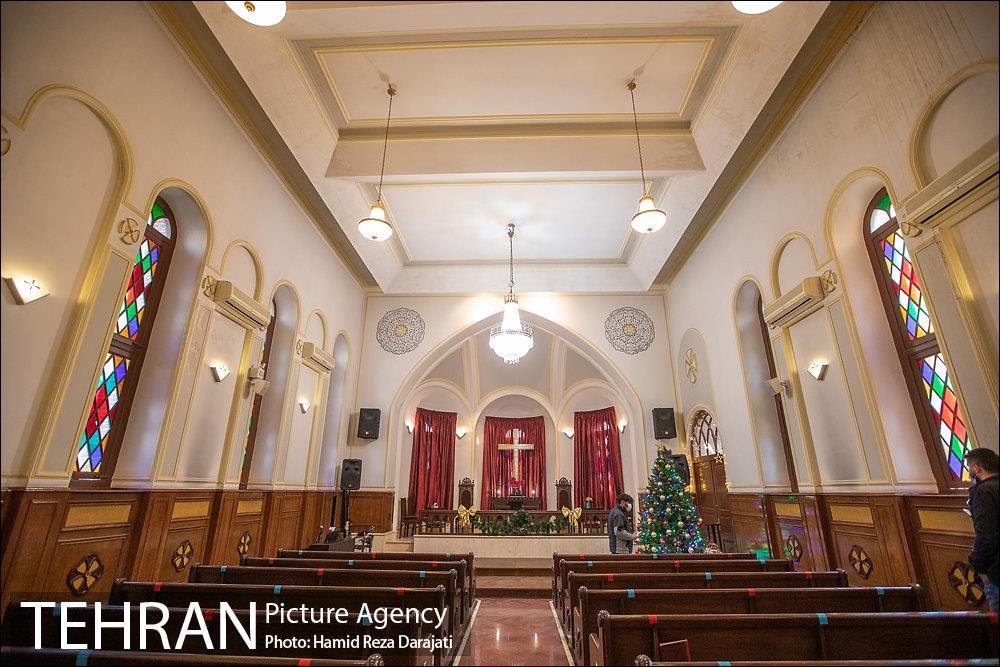
The Iranian government seized control of the historic St Peter Evangelical Church earlier this month in Tehran, despite repeated warnings from UN human rights experts and international Christian organisations, revealing a broader pattern of violence against religious minorities in Iran.
Through the framework developed by Norwegian sociologist and peace scholar Johan Galtung, this case can be understood as illustrating three interconnected forms of violence — physical, structural, and cultural — that have shaped the treatment of religious minorities since the 1979 Revolution.
The seizure of the 150-year-old Presbyterian church, founded by missionaries, and its compound — including the church building, two schools, residents’ homes and offices belonging to the Bible Society and Council of Evangelical Churches of Iran — is part of a longer history of repression directed at religious minorities since the Islamic Republic came to power in 1979.
This history has included killings, imprisonment, confiscation of property and other forms of direct and institutional repression. The violence began during the earliest days of the Iranian Revolution. Only eight days in, Arastoo Sayyah, an Anglican pastor and convert to Christianity, was murdered by Islamists in Shiraz. Christian institutions were also seized during the revolutionary period, including hospitals belonging to the Anglican Church and a school for the blind.
These events established an early pattern: direct violence against individuals was accompanied by structural attacks on minorities’ religious institutions. Christian converts, Bahá’ís, Yarsanis and other religious minorities have continued to experience different forms of repression in the decades since.
Structural and legal violence
Rather than relying exclusively on overt physical force, the Islamic Republic has used legal and administrative institutions to facilitate the gradual seizure of valuable church property. In this sense, the state has weaponised legal and administrative mechanisms as instruments of repression.
The seizure of this historic church, which once offered Persian-language services but in recent years was being used only by Assyrian and Armenian Protestants, did not occur through a single action. Parts of the compound, including its land and the Bible Society building, had already been taken years earlier. The confiscation of the remaining property was the culmination of a much longer process.
In 1998, a Revolutionary Court ordered the compound to be transferred to the Execution of Imam Khomeini’s Order, a state body operating under the Office of the Supreme Leader. The ruling prevented the Council of Evangelical Churches of Iran from re-registering the property, although the Council did not even learn of the ruling until 2008.
As UN human rights experts have emphasised, this is not an isolated property dispute but part of a longer pattern of measures directed against Iran’s Christian community, particularly Persian-speaking congregations.
Other churches and Christian properties have previously faced similar measures, including an Assemblies of God church in Gorgan and retreat centre in Karaj.
Other religious minorities are affected, too. Bahá’ís, in particular, have faced imprisonment, executions, exclusion from higher education, restrictions on religious and social life and court-ordered confiscation of their properties. The ongoing discrimination is embedded within legal, judicial and administrative structures, transforming prejudice into structural violence.
Religious minorities don’t necessarily get effective legal protection; independent lawyers themselves face prosecution or imprisonment. In some cases, the legal system functions as an instrument through which discrimination is institutionalised.
The confiscation of St Peter’s also exposes a contradiction between the Islamic Republic’s official narrative and the lived experiences of religious minorities. Several Armenian and Assyrian families residing in the compound were ordered to leave, while even Assyrian and Armenian-language worship services at the church are now prohibited. Such measures challenge the state’s claim that officially recognised Christian minorities enjoy the right to worship freely.
Cultural violence and the erasure of memory
A less visible dimension of the confiscation is cultural violence: the marginalisation or erasure of the historical memory of missionaries, Christian organisations, churches and particularly Persian-speaking Christian communities.
Cultural violence in Iran operates through several interconnected mechanisms.
The first is ideological. Through education, official media and religious discourse, the state pushes its own interpretation of Shi’a Islam while marginalising religious identities and practices that fall outside its approved framework.
A second mechanism is invisibility, or “data injustice”. Religious minorities can effectively disappear from official representations of Iranian society. Communities such as Bahá’ís, Yarsanis, Christian converts, Mandaeans and Zikris are absent from official demographic representations, even when statistics concerning Iran’s religious population are presented. A population that disappears from official data can more easily disappear from public memory. In other words, these minorities become demographic “ghosts” — present in Iranian society, yet rendered invisible in the state’s official representation of its population.
There is also a more tangible form of cultural erasure: the disappearance of religious spaces themselves.
Historic churches have been demolished, closed, confiscated or abandoned. A historic church in Mashhad was demolished in June in circumstances reportedly involving security authorities. Institutions established by Christian missionaries can similarly disappear through neglect. The now-demolished missionary hospital in Kermanshah, for example, was left vulnerable to deterioration and the passage of time. Christian converts are also denied the ability to maintain public spaces of their own, including officially recognised churches and cemeteries.
Bahá’í cemeteries have been damaged or destroyed. Dervishes (who are themselves Shi’a Muslims but whose interpretations and practices differ from those sanctioned by Iran’s theocratic establishment) have faced the destruction of places of worship, confiscation of property, and state repression.
Cultural erasure, however, does not always require the physical destruction of a building. Sometimes the structure survives while its original identity, community and function disappear. The former residence of an Anglican bishop in Isfahan, for example, has been transformed into a museum.
Churches, cemeteries, schools, hospitals, residences and community institutions are not merely pieces of property. They are spaces through which communities maintain collective memory and transmit religious and cultural identity across generations. Their confiscation, destruction, closure or transformation can therefore affect not only present-day religious practice but also a community’s relationship with its own past.
Yet nearly five decades of pressure have failed to turn communities such as Christian converts, Bahá’ís and Yarsanis into cultural or historical orphans. These communities have responded creatively to attempts at erasure by producing and preserving alternative spaces of memory, worship, education, literature and identity — from Christian worship music and literature to educational initiatives developed by the Bahá’í community. Cultural violence is not a completed process of erasure, but a constant struggle between state-imposed invisibility and minority resistance.
The experience of Christian converts over nearly half a century also demonstrates the limits of such repression: Resistance and creativity can enable a community not only to survive attempts at erasure, but to preserve its memory and sustain its identity across generations.
0 Comments